
Joel John 3422 SW 15 Street, Suit #8138, Deerfield Beach, Florida 33442, United States Tel: +1-386-310-3803 GMT Tel: +49-322 210 92714 USA/Canada Toll Free No. 1-855-465-4651Web: www.reportsbuzz.com/ Email: sales@reportsbuzz.com
Prayer: Although some teams pray before taking on college basketball powerhouses like North Carolina or Arizona, the term usually refers to a player releasing a shot from an impossible distance and location. Throughout the NCAA tournament you will often hear an announcer bark out "Oh my goodness, John Doe threw up a prayer from way beyond his range."
The ubiquitous wood pallet is often seen hoisted by a forklift and piled high with new, shrink-wrapped goods headed to market. Pallets have become such a common sight in the world of logistics that the public doesn’t view them with suspicion, or consider them particularly controversial. But that changes when the discussion turns to what happens to wood pallets at the end of their useful lives, which can be more than a decade. It’s not a trivial subject. According to the National Wooden Pallet and Container Association, there are 1.8 billion pallets—93 percent made of wood—in use in the U.S. every day, and 3.3 billion a day throughout Europe. Turning them into a fuel source when past the point of recycling not only reduces greenhouse gas emissions, but also keeps millions of tons of solid waste out of landfills each year. But from the U.S. EPA’s perspective, using wood pallets as a pellet feedstock is too great a risk to the environment and the public. In March 2015, the EPA published its final rule on new source performance standards (NSPS) for new residential wood heaters. The 82-page document mentions pallets just once, and that’s to list them among prohibited fuel sources for wood heaters manufactured after May 15, 2015. “The standard that the EPA put out is a problem, and I think we should get it changed, because it’s based on misperception,” says Joe O’Brien, president of Eastford Wood Fibre LLC in Princeton, Massachusetts. Eastford not only recycles wood pallets by repairing them and putting them back into service, but also uses them as a feedstock for its home heating Blackstone and Still River wood pellet labels. “Wood pallets are lumped in with construction and demolition wood,” he says. “I can see why you wouldn’t want that wood in a pellet. You don’t know where it came from, what it was used for or anything of that nature.”Billy Hoskins, vice president of sales for Easy Heat Wood Pellets in South Charleston, Ohio, also believes the EPA gave wood pallets a bum rap as a pellet fuel feedstock. “We don’t want tires and we don’t want railroad ties—we’re all in agreement there,” he says. “But we think that wood pallets—under the right format and the right processing—are a suitable feedstock and a sustainable feedstock.” O’Brien insists the perception that wood pallets in general are dirty, because they’re exposed to or treated with potentially harmful chemicals, isn’t accurate. This is especially the case for Eastford, which is primarily in the business of selling recycled wood pallets back to the food and pharmaceutical industries, where cleanliness isn’t an option—it’s usually a requirement. “We sell pallets to a beverage company, and they have to go through a room that’s ultraclean,” he relates. “You can’t sell them a dirty pallet. The majority of pallets are very clean, and you don’t use treated wood to build pallets. You use dry hardwoods or softwoods, most of it virgin. We’re not interested in dirty pallets because we can’t resell them,” O’Brien continues. “The providence of the pallet is important. You have to know that it’s a clean pallet so that you can resell it back into that same industry.”The feedstock for Eastford’s wood pellets comes from broken boards removed from damaged pallets being recycled, as well as pallets that have reached the end of their lifecycle. According to O’Brien, the company produces about 40 to 45 tons per day of waste wood that’s ground and used for its wood pellet feedstock. Nails in the waste wood aren’t an issue, O’Brien says. “We’ve been grinding pallet wood for 20 years,” he explains. “If you’re going to sell it to anybody, you’ve got to get the metal out. There are big magnets that take all the metal out. We’re recycling the metal too, because there’s value in it. We’re in the recycling business first.” Easy Heat wood pellets are manufactured by BDL Supply, a family-owned business that has manufactured wood packaging since 1968, and pellets since 2010. It makes pallets, crates, blocking and bracing with a primarily hardwood material feedstock. Used and new waste lumber is ground to provide the wood pellet Feedstock. Easy Heat produces about 25,000 tons of pellets annually for sale to residential consumers. Hoskins says a unique aspect of Easy Heat’s wood pellet operation is that its feedstock isn’t exposed to the outdoors and doesn’t gets wet, muddy or dirty from coming into contact with the ground. The company has a robust internal testing program to measure the pellets for moisture, bulk density and other factors. The pellets are also tested to meet the EPA-approved wood pellet standards of the Pellet Fuels Institute, according to Hoskins. “We believe in standards, and we believe in testing,” he says. “We test with the same lab that the people who make certified wood pellets do. And the results say—the majority of the time—that we pass the standards test. We just can’t be a part of the PFI program because of the one mention of pallets by the EPA.”InspectionHoskins is frustrated that the agency puts wood pallet feedstock in the same class as materials that would obviously cause air quality concerns. “The people who wrote the rule at the EPA see pallets as back-alley stuff, and I don’t think that’s the reality of the pallet industry,” he says. “It’s generational companies that provide a service and keep pallets out of landfills. Pallets take produce across the country today. It’s a clean process. Most of us are very sophisticated operators. We worry about safety and worry about cleanliness and being a good vendor.”Hoskins and O’Brien recognize that there are bad actors in every industry, and know that not all companies exercise the same level of quality control over their wood pellet feedstock. However, they strongly disagree with the EPA’s one-size-fits-all approach to prohibiting pallets as a wood pellet feedstock.“If we can pass the testing process and have robust internal testing and follow everything that the PFI standard puts out there, then why shouldn’t we be able to participate?” Hoskins asks. “Now, if I can’t pass, then that’s on us for a number of different reasons. We have to improve our processes, or our feedstock has to improve. I’m not against the standards and I’m not against testing or certification. The only thing I’m against is that the EPA has excluded us.”From a regulator’s perspective, Lisa Rector, senior policy analyst with the Northeast States for Coordinated Air Use Management, references a two-year study of wood pellet fuel characteristics the organization released in June 2013. NESCAUM is a nonprofit association representing pollution control agencies in Connecticut, Maine, Massachusetts, New Hampshire, Rhode Island, Vermont, New Jersey and New York, providing them with scientific, technical, analytical and policy support. Rector notes that after analyzing wood pellets from more than 100 different manufacturers—buying multiple bags from multiple locations—researchers found many pellets which they classed as “not normal.” The elemental analysis revealed contaminants such as magnesium, lead, mercury, cadmium, arsenic and even sulfur dioxide. In some cases, she says it was evident the wood feedstock was contaminated, but in others, it couldn’t be determined with certainty whether the contamination was naturally occurring or came from an unknown outlier. Thus, the “not normal” language was used. “One of interesting aspects is what should happen when we think we have a case of an improper product,” Rector says. “What should we do about it? It’s really complicated. It’s not illegal to make a contaminated pellet, but it is illegal to burn it. Right now, homeowners are on the hook the way the rules are structured. Without some type of mechanism to ensure that a pellet is clean, you’re leaving it to a ‘buyer beware’ situation. You don’t want to put burden on the consumer. It just isn’t common sense, and the retailer isn’t going to do it, either.”NESCAUM has studied wood pallets as a feedstock. One problem Rector sees is that the pallets can travel around the world where they’re treated with fungicides and insecticides in other countries, sometimes causing elevated mercury levels. There’s also no way of knowing what the pallets used internationally may have been exposed to, she notes. She applauds PFI’s efforts to develop standards for wood pellets. “If you want to sell a product that’s labeled, if you want the quality mark, then it has to be a quality product for all,” Rector explains. “The requirements must be focused on using clean wood and assuring a clean wood standard.”One person who’s been closely involved in developing PFI’s wood pellet standard is Chris Wiberg, vice president of laboratories at Timber Products Inspection and Biomass Energy Lab in Duluth, Minnesota. He runs an independent third-party lab that tests both virgin wood feedstock and recycled feedstock. He says the use of pallets is a hot-button issue in the wood pellet industry.“The regulators say there’s too many opportunities for something to slip through the cracks. They’re not comfortable with it, and want a blanket exclusion,” Wiberg relates. “But shouldn’t the standards themselves dictate whether or not it’s used? If there’s something we need to watch out for, tell us what it is. Let us test it and prove it one way or the other. There’s arguments being debated on both sides.”Tim Portz, PFI executive director, says the pellets from pallets issue must be resolved. “There needs to be a home for wood fiber when it becomes worn out,” he says. “We need to figure out the reality. When you look at this issue, the one thing that’s clear to me is that more work needs to be done to make consumers and retailers aware of quality programs in place to assure consumers that they’re buying a quality product that meets the PFI standards.” O’Brien says manufacturers using pallets as a feedstock need to work with PFI and the pallet industry for a solution. “A pallet works hard for all of its useful life and then has value in heating somebody’s residence or business,” he notes. “It’s the best use of a renewable resource that I can think of. You use some energy to harvest it, then it serves a purpose for somewhere between four and 12 years and then it converts to an energy product. How can you beat that?”An open, honest dialogue with the EPA is also needed, Hoskins says. “I tend to think that recycling is good and—if done properly within the rules and within certain standards—it’s the right thing for our world,” he says. “If our company can’t pass or Joe’s company can’t pass, or some other company can’t pass, then we shouldn’t be making pellets. I understand that. Our argument is that we’re fairly confident we can pass.”Until the manufacturers, the researchers and the regulators can arrive at a compromise, the issue of whether wood pallets represent a viable feedstock for biomass fuel will continue to generate a certain amount of angst in the industry.Author: Patrick C. MillerStaff Writer, Biomass Magazinepmiller@bbiinternational.com701-738-4923
If you warm the calf in a tub, completely dry him before he goes back outside to cold temperatures. If he’s wet, he may chill again. Make sure you don’t wash all the amniotic fluid off a newborn calf. If he’s perfectly clean and dry when you take him back to mama she may not recognize his smell and refuse to believe that it’s her calf. ❖
Maybe I’ve just been spending too much time at the Pass watching leashless vixens glide on longboards, taunting impotent Dads in the shorebreak.
Fifth-seeded Auburn upset the Tar Heels 97-80 in the Midwest Region semifinal behind a barrage of second-half 3-pointers. And that sent the Tigers on to the Elite Eight for only the second time and first since 1986.
North Carolina’s Nassir Little (5) tries to get off a shot as Auburn’s Anfernee McLemore and Bryce Brown (2) defend during the first half of a men’s NCAA tournament college basketball Midwest Regional semifinal game Friday, March 29, 2019, in Kansas City, Mo.
Kelly’s best wave featured a bogged first turn that he turned into an awkward slide which segued into a weirdly caught bottom turn into two more clean turns. His board looked chattery, catchy and unreliable.
He got into his truck and left Fred’s property to drive back toward Granjeno. A sticker on his pickup read “Original Texan.” He wore a hat emblazoned with the American flag and a long-sleeve flannel shirt despite the 100-degree heat. With the window rolled down, he passed through miles of land that had belonged to his and Fred’s ancestors under the original Spanish land grant. The family cemetery was lost to a government floodway in the 1950s, and the former hunting grounds were now a high-end golf course. “We’ve lost so much land already,” he said. “To me, that’s what makes the wall such an insult.”
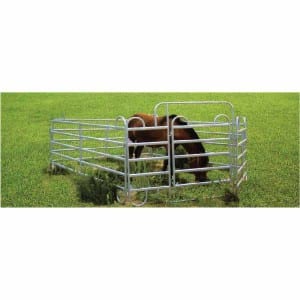
Since farm animals need feed and water, Larry proceeded to build water tanks, round bale feeders, feed bunks and even feed wagons with wheels from used inline skates. He designed and built loading chutes, rodeo chutes and even squeeze chutes, which are used when vaccinating cattle, as well as a crow’s nest like that used at rodeos and other pieces.
The MASTer Recycler is the first fully automatic collated nailing machine designed to build pallets made exclusively of recycled or reclaimed lumber. This machine allows a shop to build recycled pallets with less skilled labor and greatly reduces operator fatigue. Better ergonomics for employees also means less exposure to injuries and workmen’s compensation claims.
As for Tom’s skimboard surfing I simply don’t know what to think…. maybe someone from Santa Babs can chime in.
The High Cost of Low Grade Lumber | Farm Tube Fence Related Video:
We persistently execute our spirit of ''Innovation bringing growth, Highly-quality making sure subsistence, Administration marketing reward, Credit history attracting clients for Pole Ground Plate , Wall Spikes , Promo Fence , Based on products and solutions with high quality, competitive price, and our full range service, we have accumulated experienced strength and experience, and we've built up a very good reputation in the field. Along with the continuous development, we commit ourselves not only to the Chinese domestic business but also the international market. May you moved by our high quality items and passionate service. Let's open a new chapter of mutual benefit and double win.